On Beat
Summer 2017
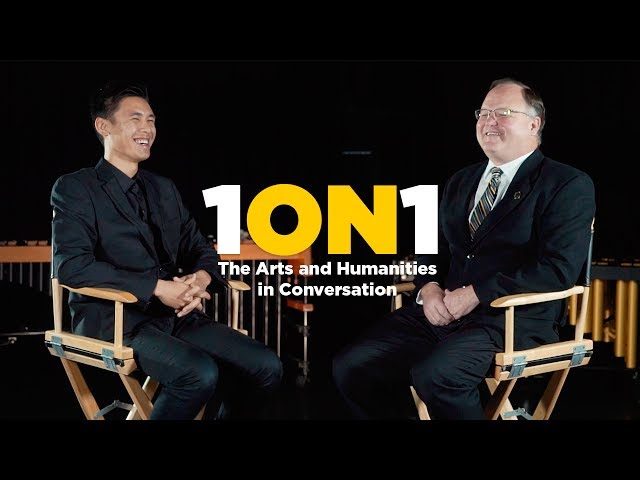
Excerpt from interview:
Jeff Moore:ĢżWhat is your earliest memory of music?
Calvin Chiu: I started [playing the] piano around age 4 ā€” in Asia, we start music education very early. I was hyperactive when I was young. I couldnā€™t really sit still and practice for hours, so my mom thought that because my dad works for a talent agency, and he takes care of the singers and stuff, she thought, ā€œWhy donā€™t you go play the drum set?ā€ Thatā€™s how I started.
How about you?
JM: I was also very young. My parents have film of it. Theyā€™re big Beach Boys fans, so theyā€™d put on the Beach Boys, and at 2 or 3 years old, I was dancing around. At family get-togethers, they would put me in the center of the room and put the music on to watch me dance. My dad was an amateur drummer, so they slowly started putting drums in the circle where I was dancing, and I started hitting the drums and playing with the music. That was really what got me started.
When did you know you were a musician?
CC: I think I was 12 when the Berlin Philharmonic came to Hong Kong to do a concert. They played Mahlerā€™s Symphony No. 2, the ā€œResurrection Symphony,ā€ which is one of my favorite pieces. It was a very transformative experience for me. I had no idea how music could really make you feel, that complicated thing that you canā€™t really tell anyone in words. We watched the whole thing, which is like an hour long, and I didnā€™t even fall asleep. I was shocked. I was so surprised that music could really make me feel like, ā€œWow.ā€ If I could play music like this then I could change peopleā€™s perspective or change their lives.
ā€œI was so surprised that music could really make me feel like, ā€˜Wow.ā€™ If I could play music like this then I could change peopleā€™s perspective or change their lives.ā€Calvin Chiu ā€™17
JM: Thatā€™s a great piece for that.
CC: Yes, one of the best. How about you?
JM: I knew I wanted to be a musician after I played with a jazz band in school. This was in middle school, and I was able to play a drum solo. I loved the response I was getting from the audience. I liked the idea of creating something that hadnā€™t been put together before. I was influenced by other things, but I thought, ā€œThis kind of freedom to improvise within a framework, this is what excites me. I want to do this every day.ā€
Can you tell me about a time when you were performing, and it didnā€™t go the way you had planned or practiced?
CC: Actually, when I was playing the concerto this semester with the Ā鶹Ō““ orchestra ā€” the ā€œSugariaā€ by Eric Sammut. It is a pretty long piece, and there are three movements. Before I got on the stage, I wasnā€™t really nervous, but then after I played the first movement my hands got a bit cold from the AC, so I started to freak out a little bit. That was terrifying. I got back [on track] in the third movement because it was slower, and you have more time to think and you can really breathe. Breathing is a very important aspect to getting your brain to work again.
JM: Yes, itā€™s tricky because thereā€™s so much to think about. I remember when I was an undergraduate, I had a mental lapse. I was playing Musserā€™s ā€œĆ‰tude in Cā€ during the departmental forum so there were 200 percussion majors. Itā€™s like in the lionā€™s den. Everyoneā€™s looking, everyone knows the pieces. Iā€™m playing, everythingā€™s going well I think.
And then thereā€™s this white spot in the music; I couldnā€™t remember the notes. Most people say when that happens, just keep going to the next thing that you can remember and then everything will be all right. Well that wasnā€™t good enough for me. I said ā€œYou know what? Iā€™m gonna start it over again. When I get a running start, itā€™ll all come back to me.ā€
I started over again. Iā€™m playing faster because Iā€™m nervous. Iā€™m not breathing. Iā€™m making all of these mistakes. I played it better the first time; I should never have done this. And I got to the same spot and [the music] didnā€™t come. Blank. And then I went on to the end.
I ran out of the room after it was over, I was so embarrassed. And my teacher came to me after and said, ā€œThatā€™s an interesting Ć©tude. I had never heard that one. Can you transcribe it for me?ā€ So I wrote down what I thought had happened and what was going on in my brain. It was very cathartic. As you know when you make a mistake, that memory can haunt you.
Can you talk a little bit about your experience with mentors?
CC:ĢżMy teacher Sophia [Woo Shuk-fai] was very influential. All of my really early percussion education comes from her.
When I was young, I was very scared of her because she was very strict. I remember the first time I saw her: It was in the Hong Kong Academy for Performing Arts. I was sitting outside the long corridor with all of the practice rooms, and I could hear her yelling at her students about how they didnā€™t practice or something. I was just this young kid freaking out. My hands were all sweaty. I went in, and it went fine.
But she had a very high standard for me because she knew that if I really tried, I could deliver in the end. I didnā€™t know that in the beginning; I was kind of frustrated. As I get older, even now, I become more and more grateful for what she did for me.
JM: Early on, your teachers are your mentors and they facilitate. But mentorship goes beyond the teaching part. Music, like all professions, is a network. And itā€™s a very interesting network in that there are different schools of performance and interpretation and philosophy. If you can establish mentors in these different schools, it expands your network. If you become isolated, your options are narrower.
ā€œMentorship goes beyond the teaching part. Music, like all professions, is a network. And itā€™s a very interesting network in that there are different schools of performance and interpretation and philosophy.ā€Jeff Moore, dean of the College of Arts and Humanities
I had an orchestral percussionist teacher who was a mentor, a rudimental percussionist teacher who was a mentor, and a jazz drummer who was a mentor. This helped me to navigate a wide-ranging field of percussion, and I was able to focus on being a generalist. For me, the mentorships allowed for support to do these different things but also expanded my network, my friends and opportunities to play. And thatā€™s what mentorship means to me in music.
CC: Does that influence how you teach us?
JM: Sure, because you have to meet students where they are. I might meet a student who is primarily a marimbist but needs to know how to do other things. If I can put things in a marimba way then maybe they excel better at snare drum or timpani. If theyā€™re a drum set player, they could see the marimba through the lens of a drum set player. And that helps me mentor a great variety of students who have different perspectives.
CC: Whatā€™s your favorite sound or noise?
JM: My favorite sound or noise is applause ā€” not only getting it but also giving it. I love the connection that you have with a lot of people. Communication is so important but then communication that leads to joy or happiness or appreciation ā€” itā€™s one of the greatest reaffirmations that all the work you put in has been meaningful for people. What about you?
CC: My favorite sound is when you walk onto the stage, before you play, and you hear this silence that is kind of awkward. The audience just breathes slower and they concentrate on the music before you play it. I really like that sound because it makes me focus on the music more. It is terrifying but also very exciting. The silence before all the music happens ā€” I think itā€™s the best thing.